Monday, 6 February 2017

Getting through the winter.....

It's at this time of year when 'helpful' golf commentators are quick to remind us how many days there are till one of the great golfing event's of the year, The Masters, takes place. As I write this there are 59 days to go before we again see Augusta in all it's splendour. As much as I'm excited about the prospect of seeing the Masters it's these next 59 days that can go a long way as to how the golf course at Muswell Hill will perform & be presented in the spring.
To date the winter has been more cold than wet, but the wet stuff will surely come at some point so a lot of our focus will be on protecting the course whilst getting on with important tasks that help the course recover from winter play.  


Ropes & signs going up this time of year are needed to try and reduce and spread wear around the golf course. As golf is now played pretty much all year round trying to minimise the damage from the main playing areas will ensure the playing surfaces are in much better condition for when the main golfing season starts.


This winter we've seen a prolonged period of frosts and cold weather. We've continued with our policy of allowing play on the main greens during this period. To date no significant damage has been evident although if we find excessive damage has occurred we may have to review this policy. Once the thaw has arrived, the playing surfaces will be worked on by means of aeration to relieve compaction & aerate the rootzone, which assists drainage by creating more air spaces & the addition of both foliar and granular feeds to help stimulate the grass plant & give it some nutrition.


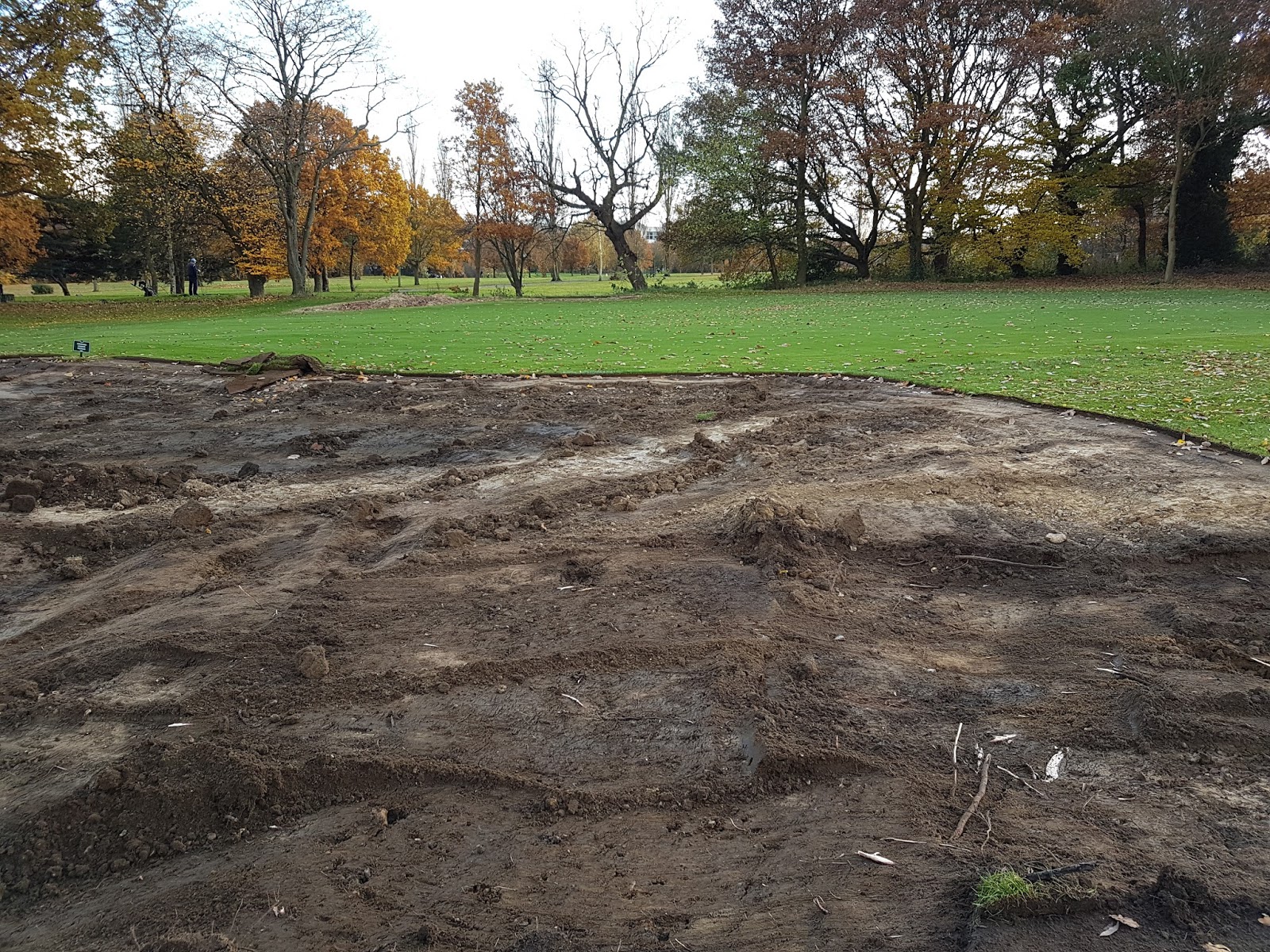
The image below is one that thankfully we haven't seen too many times this year but when we do get large amounts of rainfall some of the older bunkers are unable to cope. This is due mainly to the original drains no longer functioning. When the bunkers get flooded like this it leads to contamination of the bunker sand and ultimately a poorer sand from which to play from. The addition of the bunker blinder layer in the new bunkers means the sand will never become contaminated from flooding.


This past winter has seen extremely high disease pressure particularly from Fusarium patch. To help recovery we have been going round and putting a seed & rootzone mix into any scarring on the greens. This will help us to increase the amount of bent seed into the greens sward.


Dropping zones have also been added to the new bunkers on the 7th & 15th right hand side bunker to allow anyone going in the Ground Under Repair areas a better option where to drop.

We will continue to present the course in it's best possible way, most cutting now done by handmowers to reduce damage from heavier ride on cutting machines.


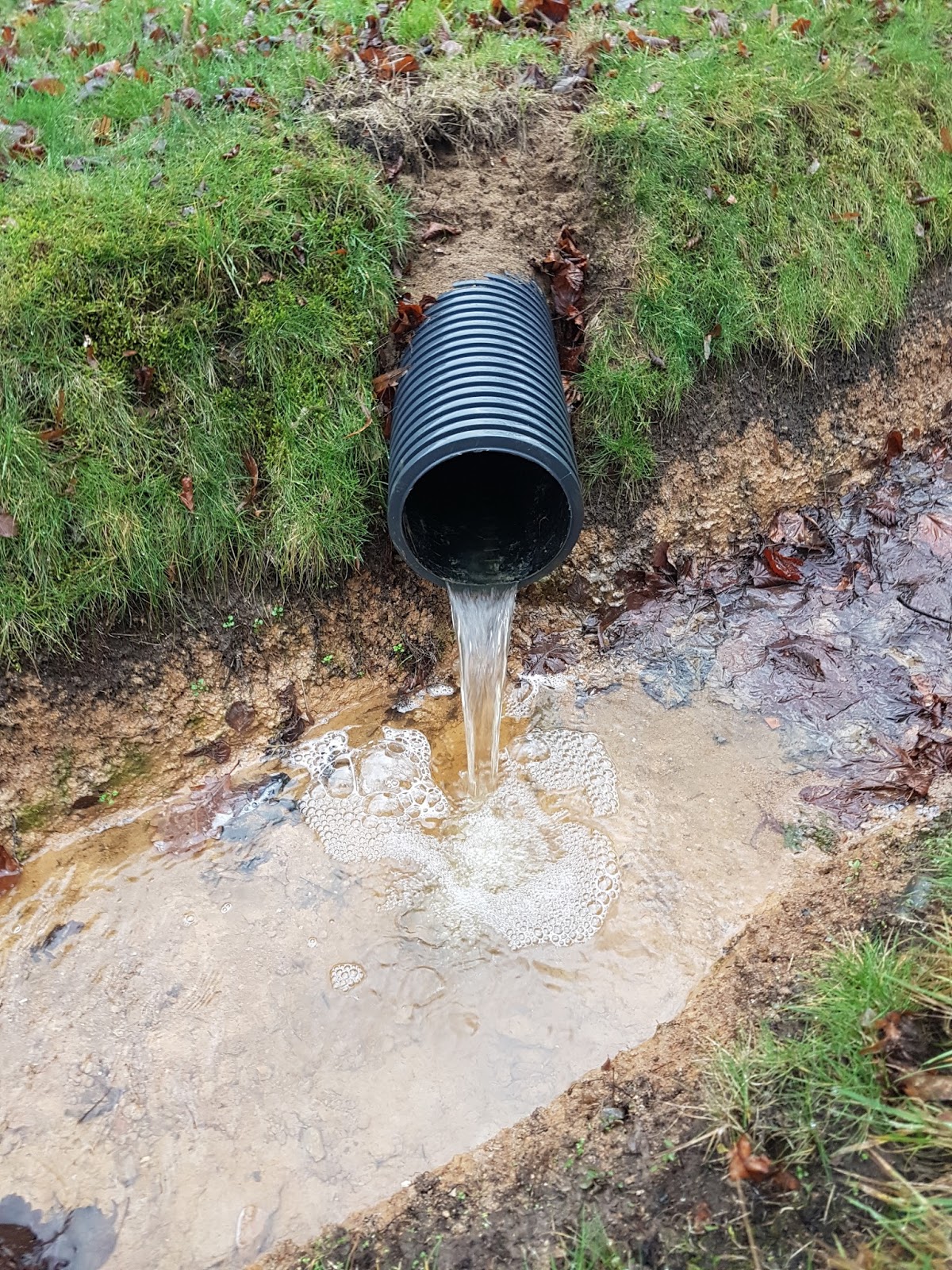
And finally a picture that makes all the work worthwhile, below is the drainage outlet from the fairway drainage installed across the 1st, 2nd & 3rd fairways. The water being removed by the drains that would previously have just run across the fairway damaging the turf and making the area unplayable. With he primary drainage now in place we can look to improve this area even more with top dressings & overseeding to improve playability and grass coverage.

Wednesday, 1 February 2017

Woodland management update.


Proposed Woodland Management works winter 2017

I'd like to set out the main proposals for the woodland work that will be carried out this winter on the golf course.
All the works are carried out in a sustainable manner to ensure continuous cover is maintained and young generations of tree's are provided an environment in which to prosper. This will be carried out by selective thinning of woodland areas and removal of stunted stems or trees with poor from. Some trees will be removed that are hindering growth & development of other trees.  All woodland management work must be aimed at preserving desirable tree species such as oak, pine & ash. This program will also improve light and air circulation and improve drainage to the playing surfaces which will improve the quality of the grass sward.

Q. Are the changes too severe?
Some of the work may appear a little drastic at first view but the work is often carried out in two or three phases. After initial work to thin out areas has been carried out these areas will be left to see how the tree's develop.

Q. Is the work necessary?
Absolutely – indeed failure to carry out woodland management works will result in species decline over time that could leave areas of the course with little or no tree cover.

Q. Are there any other benefits?
Further benefits of continued woodland management will be easier maintenance of long rough areas which will help increase the speed of play.
In addition to these works, areas around the golf course will be planted with wildflower seeds to increase ecological habitats on the course.


The images below highlight some the areas were work will be carried out.

Gorse area on 1st hole 


Copse between 6th & 7th fairway


Increase teeing options 7th medal tee


2nd tee & 4th fairway


Sunday, 15 January 2017

Bunker update

For the first post of 2017 I'd like to go through the recent construction works carried out on 6 bunkers on the course. The bunkers on the 7th, 10th, 15th & 17th have all been reshaped and the Bunker Blinder base installed in them.
The reasoning behind these works is over time with edging carried out to present the bunkers the edges of these bunkers, and many others around the course has been lost. This has led to some bunkers becoming both difficult to maintain and equally so difficult to play out off.
The addition of the  bunker blinder layer gives us a product that will drain, the sand won't become contaminated and due to the nature of the installation the bunker shape is retained due to a solid base with which we can constantly put a nice, clean fresh edge.
The bunkers have been shaped to reflect the parkland nature of the golf course, add feature and depth to the holes but yet create a hazard that is playable.


The above image shows the greenside bunker on the 18th, over time the original shape has been lost and the drainage no longer functions.

The construction process of the new bunkers would involve reshaping, installation of new drainage systems, the addition of the blinder layer then returfing. The working area of the new bunkers would involve the immediate surrounding area around the bunker so the bunker would fit into the shape & feel of the land.


For the bunker renovation projects we again worked alongside Profusion who supplied expertise & equipment for the project, especially in the shape of Connor Walsh who was to be the lead shaper on the project.


Once the initial shapes had been formed,  the next stage was to fine tune the bunker shape by highlighting the sand lines of the bunker. These are basically the top line of sand coverage that is visible when looking at the bunker. These are important as they can add shape & depth to bunkers which can in turn enhance how a hole is played.


Once the sand lines had been finalised the bunker drainage was installed and then a layer of aggregate added that is crucial to the blinder layer installation.   


The next stage is the laying of the blinder layer. This is a combination of recycled rubber granules and a binding agent that give the bunker it's drainage characteristics whilst providing a solid shape that the bunker will retain. Once the blinder is layed to a depth of 25mm, a revetted edge is layed, top soil spread around the area and then the area is re-turfed. 


As can be seen from the above images the greenstaff have again put in a tremendous amount of dedication & skill to get these works finished, including turfing in the dark...!!!!
The bunkers will now be given time to 'bed & knit in' with opening planned for mid-March - early April.

Once again I appreciate your understanding whilst we carry out these works on the course as we aim to continually improve the golfing experience at Muswell Hill Golf Club.