Saturday, 7 February 2015

Revisited... Target Greens!

Target Greens

Why are we on target Greens ?


Due to the high amount of frost days already in 2015 I thought this topic should re blogged. This hasn't been a major issue for the last couple of years with only 7 frost days in 2013 & 2014. We have had over 20 already this year. 

Below might help answer some questions.


How can a footprint be a killer?

When it's a footprint made on a putting surface that's covered with frost. 

It's hard to believe that simply walking across a golf green covered with frost can cause so much damage, but the proof will be there in a few days as the turf grass dies and leaves a trail of brown footprints.

That's why most courses will delay starting times until the frost has melted. We at Muswell 

Hill G.C do not want to have frost delays but require target greens to allow early morning play. 

This will help give us a better playing surface in the season. 


Why does frost cause problems?

Greens are fragile. The putting surface, or green, is an extremely fragile environment that must be managed carefully and professionally. 
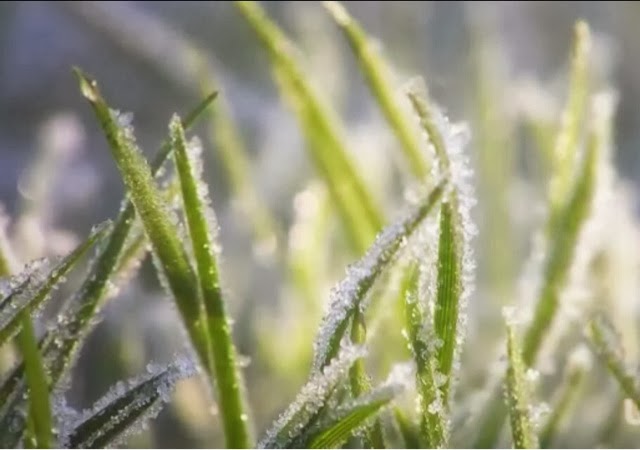


Remember that every green is a collection of millions of individual grass plants, each of which is a delicate living thing. Obviously, Mother Nature never meant for these plants to be maintained at 3 mm or even 6mm for prolonged periods. This stress makes greens constantly vulnerable to attacks from insects, disease, heat, drought, cold and frost.

Frost is essentially frozen dew. It can form when the temperature (or wind chill) is near or

below the freezing point. 


The ice crystals that form on the outside of the plant can also harden

or even freeze the cell structure of the plant. When frosted, the normally resilient plant cells

become brittle and are easily crushed . When the cell membranes are damaged, the plant loses

its ability to function normally. 


It's not much different than cracking an egg. Once the shell is broken, you can't put it back together. Added to this when greens are not completely thawed you get a frost layering in the soil structure. This can mean that the top 2 inches are not frozen but the rest is. 


This is when ROOTSHEAR happens. Basically your body weight will move the top 2 inches as you walk across the green but the rest will not move as its frozen. This makes the two layers tear apart, destroying the root system in the greens. 


The proof is in the prints

Although you won't see any immediate damage if you walk on frosted turf, the proof will emerge within 48 to 72 hours as the leaves die and turn brown. And, since just one foursome can leave several hundred footprints on each green, the damage can be very extensive.


Thanks for understanding

The damage isn't just unsightly -putting quality will also be reduced until repairs are made.

Those repairs are expensive and, in some cases, the green may have to be kept out of play for days or weeks until the new turf grass is established. Having target greens for a while till the frost melts canpreserve the quality of the greens, prevent needless repairs and may even save you a few strokes the next time you play.


Matt 


References: USGA, STRI, BIGGA, club agronomist and Greenkeeping colleges. 

Saturday, 24 January 2015

Air2g2 or R2-D2

I know why I'm writing this blog with the title air2g2 people are thinking of images of R2-D2 from Star Wars but it's not from the future or a galaxy far away but from a British company called Campey who have got the rights to distribute in the UK. 
The Air2g2 machine uses compressed air  which it injects into the ground using three deep tines. This then fractures the soil below creating gaps in the soil structure for oxygen to fill. 

I was lucky enough to find a machine (as in great demand) a haulage company and a window in the weather to allow us to use this new machine. Thanks must go to Nick at Camberley Heath for willing to arrange his needs around ours and Sports metals for sorting out the hire. 

Air2g2


So why have we hired it in? 

Following the wet period towards the end of December a couple of the greens started to show slight discolouration. This is called hypoxia and is basically when the soil is saturated. This is nothing to worry about and the spring will help us to repair any impact but something we have had to battle with. 
Our moisture readings went over 40% because of the high water table, meaning we had hit a very wet period and the air was being pushed out of the soil profile. 

 
Record-breaking rainfall and all the Irrigation water during the hot summer have left the soils wetter with no oxygen (unlike 2012 another wet year were rainfall was high in the summer, 2014 started and ended wet but had extra due to irrigation water from the borehole). 

One thing to note: the greens which we added drainage to in the past couple of years have shown now signs of this problem as there is somewhere for the water to go meaning the water table doesn't rise to high. Is this a coincidence, no. These greens were the wettest ones at the start of our drainage plans.


At this point soils are just unable to supply the grass plant with what was required in some areas. They are running on about 70% of there capability so we need to step in. 

So, the answer was for us to aerate the soils using the air2g2 machine. This machine was the main choice (following dicussions with our agronomist and other course managers) as standard aeration would mean punching thousands of holes into the greens which would just fill up like test tubes should it rain. It is normally so important to keep the profiles sealed during these winter months if possible but sometimes mother nature throws you a curve ball and you need to address it. 
Never a truer statement! 

Now we have completed the work on the greens our moisture readings came down to 32% which within an hour, this was still higher than we wanted but it's been going down since and infiltration rates have improved. 


Mother Nature then decided to help us with a week of frosts. This helps us because any water that moved through the profile following the aeration would have froze, meaning it expanded (like an ice cube does from a small drop of water) in the soil structure helping to increase the size of the gaps between particles. 

We then gave the greens a little foliar feed. This meant giving the plant the same food it would have got from the soil but direct to the leaf, meaning we were cutting out the need from the soil. 

Ok, that enough from me, just thought I would keep you informed on some of the ups and downs of our winter but let's hope we don't need to call in C3PO (Star Wars reference...again) 

Matt 


Saturday, 10 January 2015

Kev's USA blog!

After winning the Toro Student Greenkeeper of the year, Kevin O Neill or aka 'Kev' looked into his prize with excitement and trepidation. 


The weather will be cold at the University of Massachusetts during the winter turf school but the heat would be on during the intense learning program. His eight week journey began this week and Kev will be doing a blog about his adventure to new lands and styles of greenkeeping, not only for our membership to read about his experience but for fellow greenkeepers across the country who watch on with envy (apart from the weather). 

Below is the link to Kev's blog:

Monday, 5 January 2015

2014 wettest year ever!

Just a quick update on my favourite talking point...the weather!! 

2014 broke all records this year as the wettest we have ever had at Muswell Hill. I couldn't believe we broke the 2012 record so quickly. It hadn't felt that wet until December but when you look at the figures you can see we had a very wet start to the year and a very wet end. This year however we had a good summer. 
In contrast 2012 had a wet summer, I remember we could only hand cut greens during the club championships that year. 


The prevoius wet years were 2007, 2003 and then it's back to the Beatle era! So that's four out of the worst five years in 11 years! 

In January 2014 we ended up introducing a trolley ban for the first time in 7 years. This something we don't like to do instead we ask 'to make every effort to carry your bag if you can'. We say this to try and protect the course and you know if you can or can't but it's your course!  
Remember at the same time in January 18,000 people in Somerset had to move out of there homes due to flooding and Surrey suffered the worst floods ever. I saw plenty of pictures on social media of golf courses underwater for weeks. 
We however were only closed for 6 days in 2014 showing that the drainage work already carried out is helping. 

A lot of people say the course closes itself, which to a degree it does but we do have to protect it sometimes and the golfers on it as we have a duty of care. 

Below are some of conditions that the course is in when we have had to close on those few times.


What I do find pleasing is not the pictures of the flooding (all golf courses flood including the links or top courses from the TV) but the speed of recovery to get the course open has improved year on year. The photo below is the day after the  picture above just as I was putting the green back on and opening the course. 


The new drainage budget and increased top dressing budget will have a great effect on these condition in the coming years. If the weather pattern is changing for wetter years or heavier showers when it does, then we will need to carry on addressing this as we look to continue on the success we have already started!

Let's hope for a little bit of a drier year this year 2015 but I will take that summer again in a heartbeat :-) 

Matt 

Winter projects continued

Like I said in my prevoius blog, this update is going to a couple of blogs to get through (I know, I know I never know when to stop!). 


In the last blog I spoke about the bunker works at the 5th, the pathway works around the course and talked about some of the drainage work we have done. 

This blog I want to cover several other points and talk about some of the day to day stuff we are doing along with the project work. 

During the summer the schedule of works is worked out to try and maximise the work during the winter months. We take into account the 'normal weather conditions' and plan around this. We look  at four main areas: renovation and maintenance, construction, other (lead clearing, ditches etc) and woodland management. 
All these works are in place and once complete the spring season should be upon us, sometimes we have to move the schedule around slightly but this at least shows our goals. What is not included in this is the daily/weekly set ups. 
Below is a screen shot of this years schedule. 


More winter works 

Okay, back to the winter works that have been going on. 

Winter Mats
Not only have we been working on pathways, bunkers and drainage we have also increased our number of winter mats on the course. This is thanks to the 125 'Winter Mat' golf day and the last of donation fund from Mick O'Leary. This was a superbly run day by Jim Milligan along with the volunteers who helped raise around £5000 towards the project. 

Winter mats are used during the winter months as our tees are very small compared to new build golf courses as mentioned in prevoius blogs. The lack of land (as we are close to Central London) does cause these such issues at certain points of the course especially as golf is now played 365 days a year but golf has been played at Muswell Hill since 1893 and these 'modern' clubs would give anything for our history. Especially being a Willie Park Jnr design, with James Briad making further changes! Our aim is to protect the turf tees for the up and coming season, while giving a good level tee for winter use. Let's also remember that even St Andrews use mats for all shots during the winter. 

 
We have complete new mat complex's at the 5th, 6th, 8th, 14th, 15th and 18th this winter. 
The base is dug out using a digger and the spoil is taken away. 
 
Danny Rowlands again has been the main man in this by making the shuttering edges and concreting the bases level. The hitting mat is then added to the middle! 


The astro turf edge is then added once the wooden shuttering has been drilled back on top, the edges are just used to walk on and off I must say, not play off. As you can see above at the edge of the mats in wooden shuttering over concrete. The astro turf we use on the edge is 9mm thick... 9mm! No one should hit from this edge or the gap between the two mats as this could cause injury or break your club as you will be hitting concrete!!! 
The mat in the centre (which is the same size as the driving range mats) is 25mm thick and can be played from all over. Short wooden tees, stepped tees or rubber tees are perfect off of this mat. 


We are now placing the markers on the tees to stop golfers from playing from the edge because of what is mentioned above. Anyone moving these markers are changing the course without permission and will face the appropriate penalty. 

The new mats are essential for us and more will be added next season as the improvement they give to the grass tees going into the new season are unequivocal. 

Woodland management 

Over the winter months we get chance to carry out some woodland management to the course. These works are essential if we wish to produce good quality turf swards and keep woodlands on the golf course for future generations. This work is just like pruning back the garden but on a much larger scale. 


(Above the oak on the left was reduced back to allow the golfer to see the fairway and hit the shot, this is done every 4 years on average. The hawthorns in the ditch were in a pretty bad way so these were removed. This also allows us to maintain the ditch better from now on). 

(Thinning at the rear of the 1st: lifting tree crowns, removing bramble, reducing Gorse, oh and finding hundreds of balls!!) 

 Lifting trees to the crown to allow air underneath or removing scrub or dying trees gives the stronger more natural species a chance to thrive and develop. Sometimes reductions are made for golfing reasons but in the main we are doing the work to protect our greens, tees and woodlands equally. 

(Reducing width on Oaks at 12th) 

(Reducing Gorse back down to improve sight lines and the Gorse itself, the harder you hit it the better it comes back) 

Any limbs that are big enough to be logged are stacked to encourage wildlife. Scrub and debris are shredded or taken to composting areas. 

We also carried some flailing along the fence lines this year as the scrub and suckers have been encroaching year on year. We gained back over a metre of land some areas. Not a lot I hear you say but after 10 years this could have 3 metres, after 20 years 6-8 metres!! Now that's a lot of land and a lot of scrub to loose a ball in! This is something I m gong to added to the schedule year on year as we will produce a better cut the more regularly we do it. 

Gardens

Another job this winter was to modernise the beds at the rear of the clubhouse. The old rose bushes were looking a bit weak and 1970's, not the look for this forward thinking club plus it was high maintenance. 


We decided to change it to a low maintenance modern look. 


We planted box hedge balls, these are slow growing and low, meaning a great view from the clubhouse still. We then added bark to all our beds around the clubhouse to act as a mulch. 

Aeration 

We have been carrying out plenty of vibration across the golf course. 

This is included Verti draining fairways, draining approaches and surrounds. 


Greens were getting slit and sarel weekly until wet conditions stop this in December. 

We then shock-waved greens to try and get aeration into the soil without opening the surfaces. Below

Some of the wetter greens have since been aerated using the pro core to try and get more oxygen into the soils following the heavy rain


What do I mean by course set ups?

Course set ups as I call them can include a mix of cutting green, tees, aprons, fairways, semi and roughs, hole changing, moving markers, bunkers, blowing greens/tees etc. Below Martin is blowing the 17th green off (again) during the morning set up.


It's worth noting that during the winter months we walk around the course as much as possible (and sometimes without a choice) to reduce damage around the course. Add to this the change in daylight hours, it means getting around ahead of the golfers is a real test, especially at weekends. 
For example when the sunrise is at 8am we only finish working on the last green around 10am- 11am. At weekends the competitions maybe off by then and we have to make decisions while the golfers are out there regarding greens in play and only know the true picture at the state of the course by the time we finish. Please bare this in mind and give way to the greenstaff at all times. 

(Above is the morning dark, with the moonlight by the 1st at 7.30am)

During the winter months we try reduce the amount of cutting due to the lack of growth and the wet or cold conditions. 

We cut greens using walk behind pedestrian hand mowers this is unlike our triple machines we use in the summer. This reduces the weight on the key playing areas (greens and tees) but is more labour intensive. Four greenkeepers  take 3 hours (total 12 hours) to hand cut (including machinery after care) v the summer of 1 greenkeeper 2.5 hours. 

Above Graeme carries out cutting greens for his first time.


The tees are also being hand cut due to the wet conditions. 

And lastly, the never-ending leaf clearing job!! Has nearly been completed, just a couple of pockets still left to collect. 


Sunday, 21 December 2014

2014 Winter review!

cannot believe 2014 has ended, what a year it's been. From the wet start to the year to a normal summer with great weather. We experienced hosting some great golf events, we witnessed some fantastic team performances and individual winners both on and off the course.


I am sat here writing this blog the winter solstice has been and gone. This being the darkest day of the year can only mean one thing... From this day on the daylight will increase and soon (not just yet but soon) the summer will reamerge from its hiding place and we will be playing in t shirts and hitting the ball 350 yards!! 

I thought this would be a god time to review what's been happening this winter out on the golf course. I am sorry we didn't get time for my Greens Forum. This was delayed due to our new daughter arriving in the family and it was decided to hold it in March 2015. 
However I did leave information up on the greens board about the works going on if anyone wanted to read about it.

Winter Projects 

New bunkering 5th hole 

In line with our course development plan the bunkers at the 5th and a mound placed to the right of the hole have been completed. This was our last hole of our immediate works required to improve health and safety not only for our golfer but our neighbours. 

The entire area was stripped and the old two bunkers removed. 

Then the new bunkers were shaped and drainage added. A new ditch was cut into the trees on the right of the hole to provide an outlet. 


Once the drainage works were complete, type 1 was added to the base. We use this to give a firm base for the bunker blinder. This allows the water to move through the blinder and into the drainage with contamination from the clay soils. 


Next the bunker blinder was added. The base is made from rubber grumb (imagine the play park bases). This is applied using a double action mixer and glue, it's then shaped with a trowel just like how plasterers would. 


The revetted turf is then applied and the top soil which was stripped at the start and mounded up is redistributed out evenly. At this point we need to add some extra top soil to help the shaping process. 


Once the topsoil was in place. The area was turfed. At this point I got asked a lot of questions on why we strip such big areas. 
This is to allow the area around the bunker to be shaped. It shapes away unwanted water from the bunker but allows the bunker to gather golf balls from shots that are to close to
the bunker ( said in an evil villain voice from James Bond). 

Here is how they looked once turfed. 

 Once the turf had rooted we started to edge and flymo the bunkers. 
The first few loads of sand have since been added but work has halted due to the wet conditions. There is no point in damaging the surrounding areas, especially after the amount of work that went into shaping them until the area is dry enough for the extra sand to be added. Once it's dry enough these bunkers will open asap. 

I must say the architect and the shaper have done a great job. The mound to the right of the hole, really shapes the shot and adding a new bunker back left and moving first the bunker further right have transformed the hole. 

Pathways 

Thanks to 125  (fund raising project for the 125 anniversary) we have been carrying out work to some of our pathways. The pathways are essential for a site situated on clay like us to improve the golfers experience in the winter months. The down side is the amount of work these require due to washout from heavy rain and the look they have when this happens. We are looking at different options at the moment as to how we improve these. 

This year we are re-edging some of the existing pathways and will adding subtle 'sleeping policemen' style humps in them to shed the water off to the side to those pathways with that constantly wash away. 

This should stop the water building up volume  and carrying the path material away. We had looked into draining across the pathways but after speaking to other golf clubs and getting there feedback on how they need to be constantly dugout we decided to try the above option first. 

Work has been carried out on 2nd, 5th, 6th and 7th. 

The pathways start by being dugout to about 10 inches below the ground level. Stakes are then added to the sides for the boards to be added onto. 

Below the experts (Danny and Terry) were called into make sure the levels were correct as they put the boarding in. 


They even lent us a hand to start getting the type 1 in place before the rain came!! 


Above is the new pathway from the 6th green to the 7th tee. 

An extension  was added on the end of the 7th pathway and the low point was lifted up to stop this holding water in the winter months.
This required us to move over 60 tonnes of material to shape the banks to hold the pathway in place. 

The banks were then turfed. 
The end of the pathway will have extensive drainage added to it once the course drys out enough for the trencher to work. Once this is complete we will have a nice try walk from the 6th green, 7th tee to the the 7th fairway. 

Other pathway work has included digging out the edges of existing pathways so we can add a board to the edges. 
On the 5th we added drainage to the pathway edge as this is a particularly wet area. We are hoping this will stop some of the water encroaching across the pathway. The path will now be topped up with type 1 and shaped as explained above. Then the red pave topping will added to finish. 


The pathway extension on the 2nd was added late to our plans. Mainly as the area next up the ladies tee was getting worn out due to the wet conditions. This has now been completed. We hope this will now allow the area around the tee to improve. 


You may have also noticed we have added honey cone matting to the ends of pathways and bridges. This is an on going process but has helped to keep damage to a minimum. The great thing about this product is it allows the grass to grow through in the summer but be a hard wearing base in the winter. 

Drainage 

Drainage has to be one of the most important course improvements we need to be implementing. This has always been hard due to costs but the purchase of the trencher machine and converyer system for our top dresser has made this task more achievable. All the drainage works we have carried out in the past age been funded through the levy money or from our top dressing budget. Meaning reducing dressings to achieve this. 
However this year the board and greens Commitee worked hard to raise the funds to allow us to have a drainage budget within our yearly maintenance budget. This over time will see a so significant improvement to the course. 

This year we planned to hit the areas causing us the most issues in the previous years. The 4th carry from tee to fairway, the bottom of the 11th, areas in the 7th fairway. 
We also planned to add a ditch to the right of the 9th fairway in the woods.
This will catch a lot of the water that flows from the 4th hole down towards the 9th. The scrub was cleared a head of the digger and this was completed in December. The next stage will be digging out all the old existing drains in the woods to link up with this new ditch. Don't worry, this ditch isn't in play unless you hit it 60 yards off line (I can do that)! 


In November the 4th carry was drained. We put in place a herringbone drainage system with 5 m laterals. 


We added a gravel base with 60mm pipe on top and covered this with 50mm of 3-6mm stone. 


Once the pipe was covered with the gravel the rest of the trench was topped up with straight sand. We used this because it's in the rough. It's a cheaper product as retaining moisture in the summer months isn't as critical as the likes of the aprons. 


The difference the drainage has made to this area is huge already. We will be adding a secondary drainage using a gravel bander in the coming months. This will improve it even more. 

The remaining areas in our plan will be done this year. We were beaten by the weather at the end 2014 as it's now to wet to trench. I think ideally all our drainage work should be carried out in August/ September. That way damage to the course when hauling heavy loads will be a minimum and we will get the full benefit that winter. 

Other areas of drainage have included the simple tasks of digging out the bull rushes from some of the ditches, leaving some as so not to totally destroy as these are great for ecology but enough to improve the flow rates in the ditch.


And hand digging drainage from off the green through the apron and joining it into the pipe work laid previously. 


Above is a photo of the back of the 9th green. This little task has made a difference so we will look to carry out more from now on. 

I think this is enough information for one blog. It's taking forever to save as the file is getting to big!! I will add another with the rest of our winter project works and other jobs that have been getting done over the last few weeks. 

Hope you all enjoyed your Christmas and new year! 

Matt