Tuesday, 25 February 2014

February update part 2

In my last blog I mostly spoke about the weather but on this blog I want to talk about what we have been achieving during all this bad weather and what we have been up too! 

We finally managed to get fairways cut this week along with hand mowing the tees, aprons, collars and target greens (24th Feb). 


And what a difference it makes to us to be able to get out and get some grass cut :-)

The greens have been getting hand cut all winter as these have been the driest places on the course! 


We have also been a demolition crew, taking down the damaged flag pole due to high winds


Taking down the damaged nets due to high winds 


We also been building, the material bays (as in previous blog)


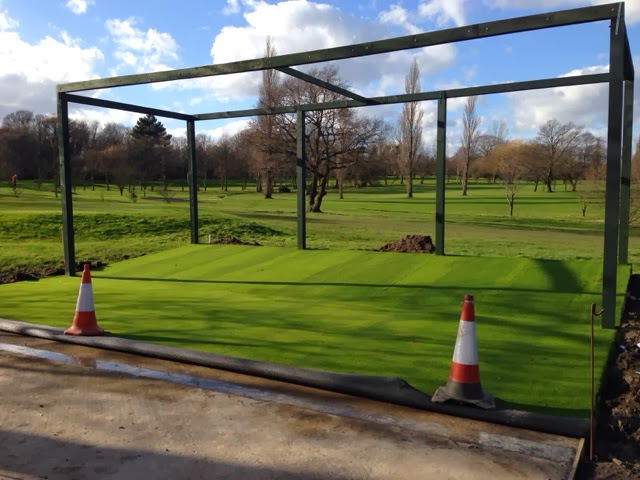
Assisting the build of the new nets (to be opened soon) 


Robin Toovey one of our greenstaff, who has been training to be golf course mechanic, carried out all our winter servicing on our machines in house this year for the first time, this is a great skill to have in our team and it also makes financial sense.


Due to the mild tempratures we have even managed to get some early fertilisers on to the bunker banks, tees, and greens.  

We have also been able to spray some areas for worms and give them a little liquid feed. 

Another task was to clear and prepare an area for Pat Spratts memorial bench at the rear of the 8th tee. (This felt personal to the guys as they all knew Pat and what a great guy he was). 


Ditch clearing has been another constant job during the winter with the high winds blowing leaf debris out of wooded areas across the course.


Woodland work has also been started around the course. Lifting the canopy's up and clearing scrub to improve sight lines and to increase airflow through the course (hopefully this will help dry it out quicker).

The greens shed also saw a major tidy up and new stairs fitted to improve safety to get to our storage area. 

The yearly health and safety review and staff training were also carried out and 
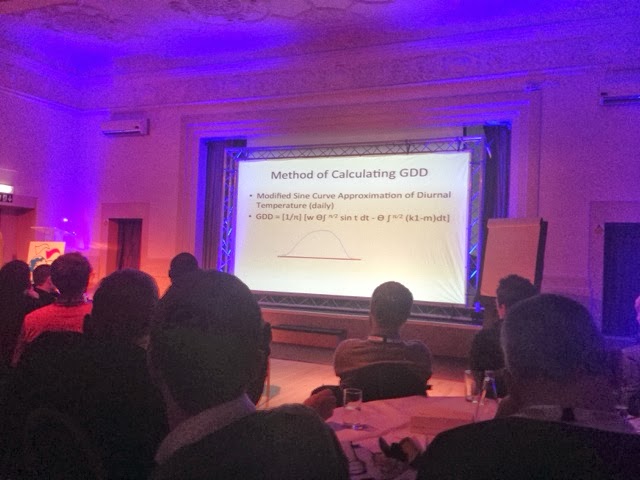
some of the greenstaff attended the greenkeepers national conference to attend seminars on various subjects. I was also lucky enough to be asked to present a seminar this year also. This is a great place with over 9000 greenkeepers attending, learning and networking all keen to learn new ideas.

Just the second part of the update on some of the work that's been getting done during this particularly wet period. 

Roll on the summer I say (when all greenkeepers moan there's not enough rain!!)

We are never happy:-) 

Matt 

February Update Part 1


Hi All, 
just thought I would update the blog on some of the weather issues facing us lately (not again I hear you cry).


As February got underway and the rain kept coming this (picture above) is what it felt like to be playing golf and at the same time this is how it felt (below) to be trying to get work done out on the course! 


Ok, on a serious note we had gone from measuring rainfall from mm to cm to feet! 
Because from the middle of December to the middle of February we saw our first ever 200+ mm of rain month in January on top of December's 123mm and so far in February over 70mm meaning that's well over a foot of rain. 
To imagine this, it's easier to imagine snow. In snow terms, 10 inches of snow is equal to an inch of rain. So for the 1ft of rain, if it had fallen as snow would have been12ft of snow!!! Now that would have been interesting...


The newspapers are saying it's the wettest winter for 248 years!

We have had record rainfall with four of the wettest five years ever falling since 2000

Should we expect more extreme weather? 

It's hard to make predictions but these are the kind of rainfall figures we can expect in years to come. 

What can we do about it?

So with more extremes in both the long and shorter-term, we will continue to invest in more drainage, topdressing, quality rootzones and improving the pathways. Doing this as part of our continued course improvements plan we will be the winners in the long-term from a playability and revenue perspective. It’s that simple!  

So what has all this rain meant for us?

From the middle of November until the middle of February the course was to wet for us to take machinery out. 

This has meant a limited amount machinery being allowed out ( only 3 times) so most work has been done on foot, walking round carrying tools and equipment and even aerating greens with a garden fork (the old fashioned) but still very useful way of aerating. 

We have managed to dig out some of the old ditches to try and get the water moving off site quicker 


Bunkers having been getting pumped out between rainfall when possible (see below)

The area behind the 10th tee (which had become a water feature) has been cleared by injecting water through the pipe to clear the silts.


The high winds have seen some major issues with trees coming down 


and large amount of debris being a daily battle 


There is light at the end of the tunnel, the equator is starting to warm up, meaning we could actually get a proper spring.
 It's nearly March and the golf season is just around the corner and the evenings are getting lighter. 

Following a wet winter there is always work to do but damage has been minimised and we are lucky compared to other clubs. If the temperatures get up and the sun comes out, we are going to be in for a great season of golf out on the course. 


Wednesday, 29 January 2014

Trolleys

The rain over the last six weeks has been at record highs with nearly 300mm (12inches) falling since the 19thDecemberThat’s nearly half a year’s rainfall.  Due to this abnormal amount of rain we have taken the unusual step to introduce an Electric Trolley ban. 


I must add It always remains the intention of the Club not to ban electric trolleys except as a very last resort. The fact this is the first time in five years we have introduced this policy is evidence of that. 

(Above is picture of a trial carried out by the EGU looking at impact of trolleys, carrying and Buggies. This photo shows that carrying reduces the wear the most)


We all know that trolleys cause damage mostly because users tend to follow the same routes from tees and around greens while bag carriers are able to spread out and roam freely all over the course which spreads the wear. 


The trolley routes have become worn (see above) from the constant traffic - thus the use of more widespread traffic control measures have been introduced to try and to divert them away from sensitive or crucial parts of each hole using white line or ropes.


The main reason is that our soil does not drain so readily being clay, often leaving it very wet and easily damaged. The grass cover begins to thin as ground temperatures fall and growth comes to a virtual standstill for several months during which it is easily damaged and slow to recover.


 Over the past few years the Club has lengthened several paths to eliminate areas that were prone to heavy wear and further path improvements will continue where necessary.


So why only ban electric trolleys?

Some careless use of electric trolleys causes additional unnecessary damage due to spinning wheels, particularly when starting on a slope and the greater impact on the ground due to their weight. If trolleys are needed by players during winter then lighter weight pull trolleys are preferable to help preserve the course. 


It is generally hoped that everybody who is physicallyable to carry will do so, and encourage their regular playing partners likewise this is when we ask 'Please make every effort to carry your bag'. (If you have a medical certificate you may use electric trolley). 


For those of you who need to use a trolley please could you follow a few handy hints to protect the golf course. 


Go around the greens following the white trolley lines.


Please keep the trolleys away from the areas marked in yellow in the diagram      ( on the aprons, pictured above) 

Keep away from collars 

And green surrounds (these are normally built with a slope). 

•try to reduce the weight in your bag
•be careful on banks and slopes
•spread the wear if possible
•follow the traffic control measures 

My final message would be that as soon as it is practical we will remove all bans of this nature and any type of trolley ban or course closure is always our last resort and it’s our way of protecting the golf course for the season ahead.


Our intention as always is that members can enjoy their golf!


Matt 

Saturday, 25 January 2014

Material storage bays

Ever since the fire in 2007 destroyed the Greenkeeping sheds, machinery and irrigation system. We have rebuilt something better than we had before. 
The material storage bays for our sands, top dressings and pathway materials was always on the list.


Some of you may have noticed the bays have now been built at the far end of the car park where we have stored material for the last 7 years have finally become a reality thanks to John Braziers engineering genius and amazing planning with help from us the greenstaff and Eric (our digger man). This has been a great project to do over the last two weeks especially as the rain hasn't stopped! 


The board made the decision to make these a priority as part of the plan to tidy up the car park area (see picture above of how it used to look). Having materials lying loose always looked untidy but more importantly it meant there was always some wasteage. 


The plans that John produced were very professional. We looked at many different styles, shapes and angles (Arctic lorry turning circles+ widths etc) before selecting the plans above. These were not only cost effective (sleepers and RSJ) but could be built by the greenstaff. In the end we decided to build 2.5 bays rather than 3 as this still allowed access to the container in the corner. 

I will try to give a quick over view of the last two weeks- 


The greenstaff cleared the remaining top soils and sands out of the bay area (creating a temporary area close by). John then marked the areas out with cones before marking them with spray paint. At this point Gill Brazier, Johns better half joined in (Gill is also an Engineer) and together they marked the plans on the floor in great detail (plus I think enjoyed using my spray guns:-) 


 The foundations were marked out in red with the line required for the sleepers in blue. 


Eric then arrived with a breaker and started to break the Tarmac up ready for digging out the next day.


The foundations were then dug out to 1/2 metre wide. 1 metre long and 2ft deep. 


Some of the double foundations were dug out together.  

All the sleepers were then numbered and measured. They were then grouped in sixes by a letter. This meant that each group of 6 were the same size and the RSJs could be put in tight against them. (While John was measuring he noticed two that were to big so these were chainsawed down to the correct lengths).

Each wall of sleepers (to be built) was given a letter which represented the sleeper lengths. 


Once we had dug out the foundations for the back wall we started to move the RSJ's into place. These had been stored in our yard and were moved into place. 


The optimum lettered sleeper was then placed at the bottom as the RSJs were lowered into place. This also held them in position during concreting. 

 
With the back wall and first of the side RSJ's in place it was time to adjust ready for the concrete poor. 

 
Mean while Kevin and Martin started cutting the reinforcement mesh into the correct sizes and cutting out the RSJ shapes. 

The concrete then arrived and was poored in. 

The reinforcement mesh and L bars were then added to the concrete. 

As the cement went off the levels and any adjustment were made. 


The next day the sleepers were placed in the back wall according to there letter. 


The next stage was to dig out the foundations for the side walls(this wasn't done at first so the concrete lorry could get access to all the back wall holes). 


Another daily issue- the pumping out of the foundations as these were filling due to the heavy rain. 


All 15 RSJ's were now in place and ready for concreting. 

Again the concrete was poored with reinforcement mesh and L bars added.

Finally the sleepers were added to the side walls. 

The bays were now finished and the stock materials were placed back into the bays. 


And here's the team that built them.L-R Kev, Eric Butler (digger/looks), Lee, Robin, John Brazier (architect/engineer and worker), Martin and myself (taking the photo). All the greenstaff. 

A great job by everybody. It will improve the car park and the way in which we use our materials with less wasteage. A special thanks to John for giving up so much time to help. 

Matt