Sunday, 7 August 2016

Course Maintenance works

As we enter the period of course maintenance works this forthcoming week I'll explain our proposed works schedule and explanation behind the works.
Course maintenance weeks allow us to carry out a number of tasks on the golf course to help improve the playing surfaces & characteristic's and to be more efficient in the timings of the works and also in the quicker recovery period.
This course maintenance week the work we will be carrying out on the greens will involve hollow coring with a micro tine followed by deep aeration with the verti drain machine. This will be supplemented by the addition of over 60 tonnes of sand dressing to the putting surfaces. The greens will then be over seeded and a granular feed applied to aid recovery.
Works to be carried out on the Tees & Aprons will be similar with less sand applied and we are aiming to hollow core areas around green surrounds.
Why carry out the work?
Aerating Turfgrass helps relieve some of the stresses we put the surfaces under during the playing season, creating air space in the soil profile and creating spaces for roots to grow and develop will lead to healthier grass plants that are better able to tolerate stress and also allow the surfaces, combined with the drainage works being carried out will help us have better playing surfaces for longer periods of the year. The addition of sand top dressing across all surfaces improves ball roll, smoothness & drainage performances of the playing surfaces.


Follow the blog this week and I'll post more pictures from the work we are carrying out.
I'd like to finish by thanking the membership for there understanding whilst we carry out these works and as ever we will endeavour to keep the disruption to a minimum and aim to have the surfaces back in play as soon as possible.
Many thanks.

Tuesday, 19 July 2016

Your Greens need you.....

As greenkeepers our job is to prepare and present the golf course in it's best possible condition whilst striving to make improvements that will enhance and preserve the golfing experience at Muswell Hill. Sometimes though we need the assistance of the members & visitors who play the course.
In this instance I'm referring to pitchmarks on the greens.
The picture below is taken from the front of the 11th green last Monday, 11th July.
Each ball represents an unrepaired pitchmark.


In total there were more than 25 pitchmarks, I actually ran out of balls to put in all the marks.
Why is this so important?
We are constantly trying to achieve smooth & true putting surfaces at Muswell Hill. 
Most of the maintenance works we carry out are aimed at producing good putting surfaces, aeration, top dressing, monitoring heights of cut, balanced nutrient input all help us produce true putting surfaces.
An unrepaired or badly repaired pitchmark leads to bumpy, untrue surfaces and is also more likely to encourage weed or disease invasion of the putting surface.

If everyone could repair their own pitchmark, the problem would be solved and the putting surfaces will benefit. The condition of the course will therefore benefit. Its a win-win.


Sunday, 17 July 2016

A closer look at Attention to detail....

As the golfing season is now in full 'swing' I'd like to go through some of the other tasks we carry out on the golf course that help us keep the course looking tidy and improve the overall appearance of the golf course.
Apart from cutting grass & preparing the surfaces for play a great deal of the greenstaff time is spent carrying out attention to detail tasks.
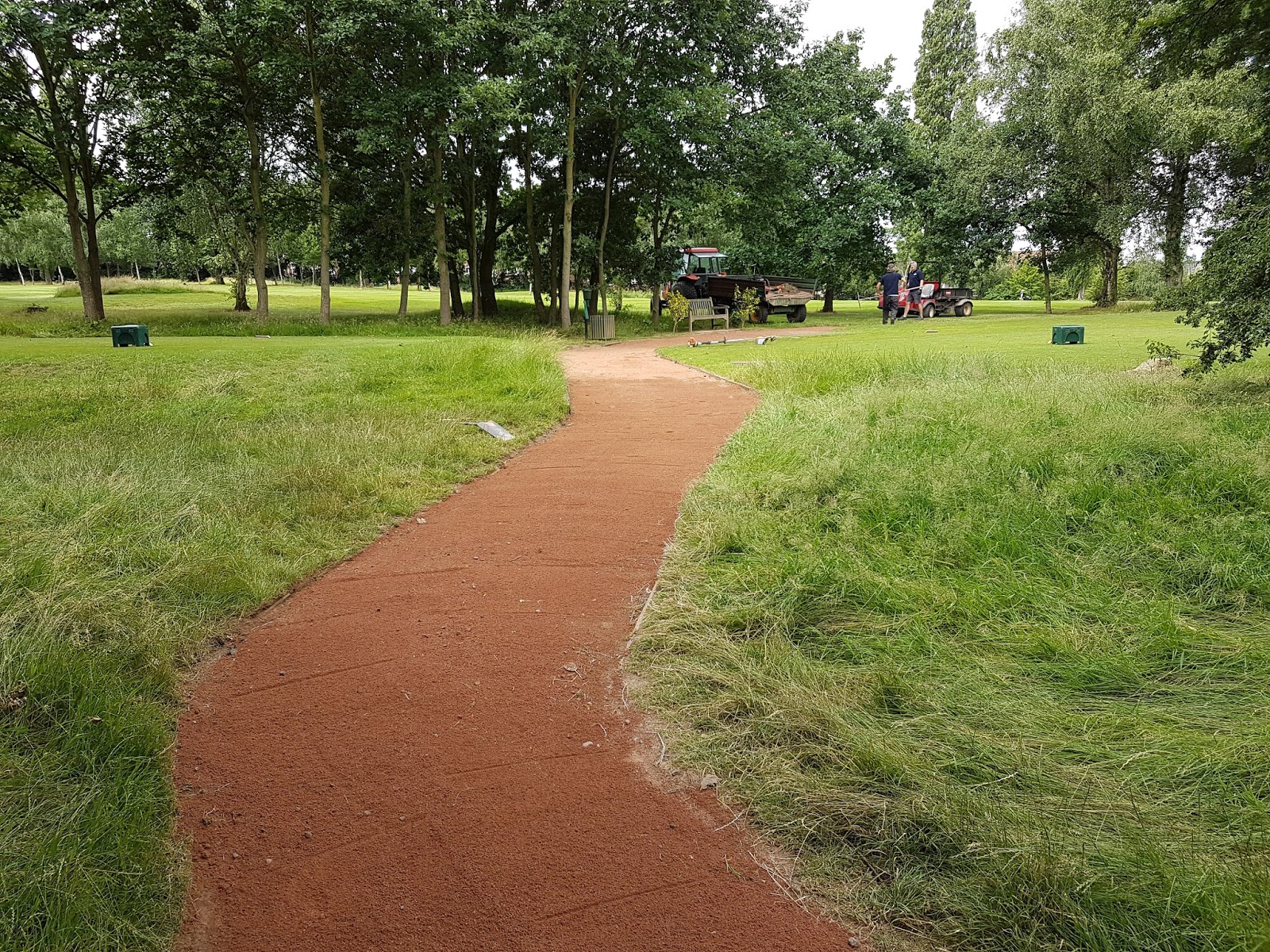
The list is numerous and ever growing. The range of tasks are wide & varied and range from emptying bins, painting ball washers, painting distance yardage markers, topping up paths, strimming ditches to cutting hedges, flower planting around the clubhouse and cleaning up benches around the course.
They way we try to manage these tasks is to firstly set the golf course up for the day with the various maintenance practices carried out and then set about completing some of the other attention to detail tasks. This allows us to be generally clear of the golfers playing on the course yet still working to improve the quality and feel of golf at Muswell Hill.


Wednesday, 22 June 2016

The longest day....

So here we are on the 20th June, the longest day and the start of the British summer. There is talk of a Strawberry moon, the tennis at Wimbledon is around the corner, final Open qualifying is under way & the Euro's continue to delight/frustrate (delete as appropriate...)
On the golf course the forecast for the day was poor, and the forecasters were spot on.
I thought this would provide a good opportunity to look at how some of the surfaces around the golf course cope with heavy rain downpours.
To begin with amounts, from 7am this morning we had 18mm of rain until 2pm. Compare this with the June average rainfall of 54.2mm, we had nearly a third of the months average rainfall in 7 hour's. Obviously the surfaces are going to be wet. The question I'm interested in is how quickly the water moves off the surface & then how quickly the water moves through the profile.
The way to get good infiltration rates, the rate at which water moves off the surface,  is to have good grass sward coverage, reduce thatch levels and create & maintain a well aerated rootzone. Ways we strive to achieve these conditions on the playing surface's are sound agronomic practice's including aeration & top dressing.
Once water has begun to move off the surface the ease & rate at which it moves through the profile is determined by the underlying soils & the drainage capabilities of the soils.
As Muswell Hill golf course is built on heavy clay soils we need to install drainage systems to help dry out the surfaces. The recent greens drainage works carried out are helping the percolation rates of water being able to move through the profile which will help us to provide drier playing surfaces.

We can compare this to images of the 17th green below, taken at the same time that show more surface puddling, meaning it's taking the water longer to work through the profile as the soils stay wetter for longer.


Thursday, 16 June 2016

A little rough around the edges....

A big part in presenting the golf course, and enhancing what we have at Muswell Hill, is the way we present the areas around the golf course which aren't directly in play. There are numerous reasons why some areas are allowed to grow up. One is to help define different areas around the golf course and increase golfing strategy, another reason is to try and reduce the amount of time we spend cutting the rough areas of the course. At times during the year we can spend up to 32 hours a week cutting rough areas of the golf course. One of the biggest challenges we face, and something that is an overriding factor in the management of the rough areas is not making them to penal and for them not to have a negative impact on the speed of play.

At this time of year when the growth potential of grass is at its premium these areas become long, and as some might say 'juicy!!!' So how do we manage these areas?
One thing we have to manage is the woodland areas around the golf course. By thinning out some of the woodland copses as part of our woodland management program it will allow us not to have areas that are both dominated by areas of trees & rough, getting a balance by preserving the woodland areas we have and making these areas easier to maintain so we can get machines in to cut the areas.
Another maintenance practice we carry out is cutting down the longer rough areas to help thin them out and develop theses areas so the grasses become finer and ultimately it's easier to find any golf balls that dare to stray in there.
Having longer, eco-rough areas around the golf course also helps us provide area of importance for wildlife habitats.


Another area we have developed this year is round some of our bunker faces. This is again aimed at helping to preserve grass coverage around these areas which suffer from loss of coverage due to sand splash from the bunker sand and also too add an extra aesthetic edge to the way the golf course is presented.


So if you happen to be out on the course in the thick stuff this week, it could be worse. The rough prepared for this week's US Open at Oakmount is by all testaments 'brutal'. Thick, lush and lots of it coupled with greens stimping at over 15 should make for some interesting scores.


Wednesday, 15 June 2016

You can hear the grass grow.......

As the month of May has been and gone and June is now with us I'd like to give you an update on what's been happening on the golf course.
The long hard days & nights of the winter seem like a distant memory now as the temperatures have now increased, the rains have come and the grass is quite literally growing behind us.
As a Greenkeeper the importance of water cant be overstated. Either in the winter trying too work out how to get water off the course to the summer months when the different challenge is to make sure the moisture levels in the playing surface are correct. Keeping the levels correct will help make the surfaces receptive to the golf ball and adequate levels will help reduce drought stress on the grass plant. The way we check this is using a moisture meter, this device measures moisture content that is available to the grass plant.


The recent spell of wet weather and warm conditions has led to perfect growing conditions.
This leads to some playing surfaces being cut every day, with us using varying different techniques to help improve the playability and also using products to help us regulate the growth of the grass and improve the texture of the surface.


Since the last post we have been working on the playability of the putting surfaces. We measure the performance of the greens not only by the speed but also by how the ball rolls across the surface, the smoothness and the greens receptiveness to golf balls. Works we have carried out have including top dressing every two weeks, aeration works and nutrient input. During the season we will apply nutrients to the greens every 2 weeks. This form of nutrient input gives the grass plant just enough of the nutrients it needs, it is sometimes referred to as spoon feeding. By feeding the greens this way it helps us have a better control of growth and this will hopefully lead to better, more consistent putting surfaces.

Over the last few weeks the level of course presentation has increased. Presenting the course at this time of year is a real joy and the Greenkeeping take great pride in how the course is presented. The majority of our this time is spent cutting, with the various mowers we have putting the hours in to help define the different areas on the golf course.


Work will now continue throughout the season maintaining and improving the quality of the playing surfaces and continuing with all the attention to detail jobs around the course.
I'll give you an insight into all these jobs in one of the next posts.
Happy golfing.